



Sourdough Starter Care
Complete Guide to Sourdough Starter Care
A healthy sourdough starter is the foundation of great sourdough bread. Whether you're receiving a starter for the first time or maintaining one you've had for years, this guide will help you keep it active, healthy, and ready to bake whenever you are.
What Is a Sourdough Starter?
A sourdough starter is a living culture of wild yeast and beneficial bacteria. These naturally occurring microorganisms ferment flour and water, creating the rise and flavor that make sourdough bread unique.
With proper care, a sourdough starter can last indefinitely and become stronger over time.
Daily Countertop Care
If you bake several times per week, keep your starter at room temperature.
Feeding Schedule
Feed every 24 hours.
Basic Feeding Ratio
-
50 grams starter
-
50 grams water
-
50 grams flour
Or simply discard about half the starter and replace it with equal parts flour and water by weight.
Storage
-
Keep in a loosely covered jar.
-
Store between 70°F and 78°F.
-
Avoid direct sunlight.
A healthy starter should double in size within 4–8 hours after feeding.
Refrigerator Storage
If you only bake occasionally, refrigeration is the easiest option.
Weekly Feeding
-
Remove starter from refrigerator.
-
Let it warm up for 30–60 minutes.
-
Discard all but about 50 grams.
-
Feed with 50 grams water and 50 grams flour.
-
Leave at room temperature for 1–2 hours.
-
Return to refrigerator.
This maintenance schedule keeps your starter healthy even if you aren't baking regularly.
Preparing Your Starter for Baking
For the best results:
1–2 Days Before Baking
Feed your starter and allow it to become active.
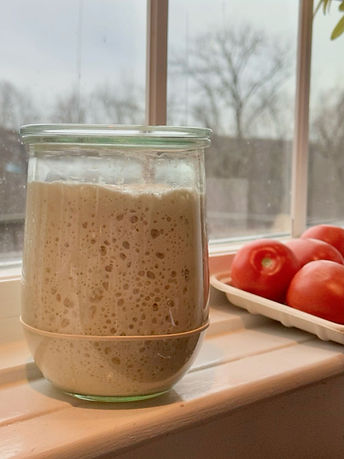
Signs It's Ready
-
Doubles or triples in size
-
Dome-shaped top
-
Lots of bubbles throughout
-
Pleasant tangy aroma
-
Passes the "peak test" (at its highest point before beginning to fall)
Most recipes perform best when the starter is used at or near peak activity.
Understanding Starter Consistency
Too Thick
Add a small amount of water.
Too Thin
Add a small amount of flour.
A healthy starter should resemble thick pancake batter or a soft muffin batter.
What Is Starter Discard?
During feedings, a portion of the starter is removed to maintain a manageable size and proper balance of yeast and bacteria.
Discard can be used in:
-
Pancakes
-
Waffles
-
Crackers
-
Pizza dough
-
Muffins
-
Cookies
-
Biscuits
Discard does not have to be thrown away.
Signs of a Healthy Starter
Your starter is likely healthy if it:
✓ Doubles in size after feeding
✓ Has bubbles throughout
✓ Smells pleasantly sour, yeasty, or slightly fruity
✓ Rises predictably after feedings
✓ Produces good oven spring in bread
Troubleshooting Guide
My Starter Isn't Rising
Possible causes:
Cold Temperatures
Sourdough thrives in warmer environments.
Solution:
Move the starter to a location between 70°F and 78°F.
Not Feeding Often Enough
The yeast may be underfed.
Solution:
Feed every 12 hours for several days.
Weak Starter
New starters can take time to strengthen.
Solution:
Continue consistent feedings and be patient.
My Starter Smells Like Alcohol
A strong alcohol smell usually means the starter is hungry.
Solution:
Feed immediately and increase feeding frequency.
This smell is commonly called "hooch."
There's Liquid on Top
A gray or dark liquid layer is normal.
Solution:
Pour it off or stir it in, then feed the starter.
This is simply a sign that the starter needs food.
My Starter Has a Pink, Orange, or Fuzzy Spot
Discard the entire starter immediately.
These colors can indicate harmful mold or contamination.
Do not attempt to save or use the starter.
My Starter Has Black Specks
Small dark specks are often dried starter residue from the jar.
If the starter smells normal and shows no signs of mold, it is usually safe.
When in doubt, transfer a healthy portion to a clean jar and continue feeding.
My Starter Smells Like Acetone
An acetone or nail-polish smell means the starter is extremely hungry.
Solution:
Feed more frequently for a few days.
The smell should disappear as the starter recovers.
My Starter Isn't Bubbling
Possible causes:
-
Chlorinated water
-
Cold temperatures
-
Weak starter
-
Recent refrigeration
Solution:
Use filtered water, maintain warmer temperatures, and continue regular feedings.
My Starter Doubles Then Falls
This is completely normal.
The starter rises as it ferments and eventually collapses after reaching peak activity.
For baking, try to use it shortly before or at its peak.
Frequently Asked Questions
Do I Have to Use a Scale?
A kitchen scale is strongly recommended for consistency and accuracy.
However, equal volumes of flour and water can work for casual maintenance.
Can I Switch Flour Types?
Yes.
Many bakers use:
-
Bread flour
-
All-purpose flour
-
Whole wheat flour
-
Rye flour
Whole wheat and rye often increase activity due to their higher nutrient content.
Can I Feed It Straight From the Refrigerator?
Yes, but allowing it to warm slightly often produces faster results.
How Long Can a Starter Stay in the Refrigerator?
Most healthy starters can go several weeks without feeding, though weekly maintenance is ideal.
Can I Freeze My Starter?
Yes.
Spread a thin layer on parchment paper, allow it to dry completely, then store in an airtight container.
Rehydrate and feed when ready to use.
Final Tips for Success
-
Feed consistently.
-
Use clean containers and utensils.
-
Avoid extreme temperatures.
-
Don't panic if your starter changes appearance slightly.
-
Remember that sourdough starters are remarkably resilient.
With regular care, your sourdough starter can provide delicious homemade bread for years to come.
Happy baking from The Cozy Bee Bakery!